Hey there, if you’ve ever shopped for a boardroom table, you’ve probably stared at the tabletop specs and gone “wait, is that thin enough? Or is that overkill?” I get it—when you’re a small business owner, office manager, or even a startup founder prepping your first proper boardroom, you don’t want to drop thousands on a table that feels flimsy, or spend way too much extra on a thickness that doesn’t matter for your actual use. As a boardroom table supplier, I’ve fielded this exact question at least a dozen times a week over the last 8 years: what’s the standard tabletop thickness? Today, I’m breaking this down like we’re chatting over a coffee (minus the awkward small talk) with real numbers, real use cases, and no overly jargon-heavy nonsense. Boardroom Table

First off, let’s get one thing straight: there’s no universal “one size fits all” standard, but there is a baseline that’s been tested by furniture manufacturers, architects, and even board members who get way too annoyed wobbly tables mid-budget vote. Most off-the-shelf and custom boardroom tables land between 1.25 inches (32mm) and 2 inches (50mm) for solid wood or high-quality engineered wood tabletops. That range isn’t random, either—let’s unpack why.
The 1.25-inch (32mm) mark is the workhorse for small to medium boardrooms, the kind that fit 6 to 10 people. Think: a 12-foot rectangular table for a SaaS startup’s weekly leadership huddle, or a round table for a 8-person non-profit board. Why this thickness? It strikes that perfect balance between sturdiness and cost. If you go any thinner—say, 0.75 inches (19mm)—you’re risking sagging over time, especially if you’re dropping heavy laptop chargers, whiteboard markers, or even a stack of meeting binders on it multiple times a week. I’ve seen cheap boardroom tables with 0.75-inch tops that started bowing in the middle after 2 years of use, and replacing that table is a massive headache for anyone’s budget.
But wait, why not just go super thick all the time? That’s where the 1.5-inch (38mm) to 2-inch (50mm) range comes in, and that’s the “premium standard” for larger spaces or formal use. If you have a boardroom that seats 12+ people, it’s probably not just for casual huddles—you’re hosting investors, client presentations, or official board meetings that get recorded, and a flimsy table will look unprofessional on camera or in front of a big group. A 2-inch solid wood top? It’s got heft to it—when you tap it, it doesn’t make that hollow, tinny sound that screams “cheap Ikea knockoff.” It also holds up way better to wear and tear: scuffs from rolling office chairs, spills from coffee, even accidental bumps from carrying monitors or conference equipment. I recently sold a 16-foot boardroom table with a 2-inch solid oak top to a regional bank, and their facilities manager told me a few months later it’s still as sturdy as the day it was installed, even though their teams move big presentation gear on it all the time.
Now, let’s talk about edge thickness, because that’s a part people sleep on. A lot of budget suppliers will advertise a “2-inch tabletop” but mean the edge, not the actual surface. That’s a sketchy trick. For example, some will make the top core out of 0.75-inch particleboard, cap it with a thin veneer, and then router a 2-inch thick edge around the perimeter. Don’t fall for that. Real, solid tabletop thickness—what you sit at, what holds your laptop, what you lean on when you’re arguing about Q3 budgets—needs to match that baseline we talked about. If the edge feels thick but the middle is thin, that’s a fake. I always tell my clients to test this if possible: push on the middle of the tabletop. If it flexes more than an inch, it’s too thin, no matter what the spec sheet says.
Wait, what about materials? Does that change the standard thickness? Short answer: sometimes, but the ranges stay pretty consistent. Solid wood, like oak, walnut, or maple, usually falls in the 1.5 to 2-inch range because solid wood can warp if it’s too thin and not properly dried. Engineered wood (like MDF or plywood cores with a veneer) can get away with a little less, but even then, we don’t go below 1.25 inches because MDF is dense but still prone to sagging over long spans. If you’re going for a glass top? That’s a whole other ballgame, but glass boardroom tables are usually for casual spaces, not formal boards—their standard thickness is 0.375 to 0.5 inches (10 to 12mm), but that’s not what most people mean when they ask about boardroom table tops.
Let’s tie this to real use cases, because that’s what matters most. If you’re a startup with 6 people, meeting 2 times a week, using laptops and not much else, a 1.25-inch high-quality engineered top is totally fine. It’s budget-friendly, looks good, and won’t have issues for 5+ years. If you’re a mid-sized company with 10 board members, hosting a client presentation once a month, and rolling heavy chairs in and out daily, go for 1.5 inches—better sturdiness, a nicer look, not a crazy price jump. If you’re a law firm, financial institution, or any space that hosts big public meetings, investors, or wants that “luxury, built-to-last” vibe, 2 inches is worth the extra cash. It’s an investment, not a purchase, and that table will outlast 3 or 4 budget tables.
I should also mention custom tables, because a lot of my clients go custom. Some people want a really unique look, like a live edge top, and they’re worried about thickness. We adjust for that—live edges might have varying thicknesses, but the flat part of the top where everyone sits is still held to the same 1.25 minimum standard, usually bumped to 1.5 or 2 for longer spans (like a 18-foot long table). No excuses for wobbly live edge tops, trust me—we’ve fixed a few that were done wrong by other suppliers, and the issue was always thickness.
Wait, common myths busted real quick. Myth 1: “Thicker = better.” Not always. If you have a tiny 4-person boardroom, a 2-inch thick table will feel bulky, take up way too much space, and cost way more than you need. Myth 2: “Standard thickness is just one number.” No, it depends on size, use, and material, like we talked about. Myth 3: “All suppliers list the same specs.” Nope, that’s why testing (or asking for sample edge pieces if you’re ordering online) is key. I once had a client who ordered a “2-inch table” from another supplier, and when it arrived, the edge was 2 inches but the middle was only 0.75 inches—they sent it back, obviously, and came to me for a proper one.
Now, let’s get to the part you actually care about: what does this mean for you? If you’re in the market, first figure out two things: how many people are you seating, and how often is this table getting used for heavy stuff (presentations, moving gear, etc.)? Small, casual boards: 1.25 inches. Mid-sized, regular use: 1.5 inches. Formal, high-use, large groups: 2 inches. And always, always ask the supplier to clarify if that thickness is the actual top surface, or just the edge. That’s the difference between a table that works for 5 years and one that needs replacing in 2.
As someone who’s been doing this for years, I’ve seen the good, the bad, and the ugly when it comes to boardroom tables. The most common regret I hear from clients is buying a table that’s too thin, or getting scammed on fake thickness. That’s why I’m so transparent about this—no fine print, no hidden specs, just real advice based on what actually holds up.
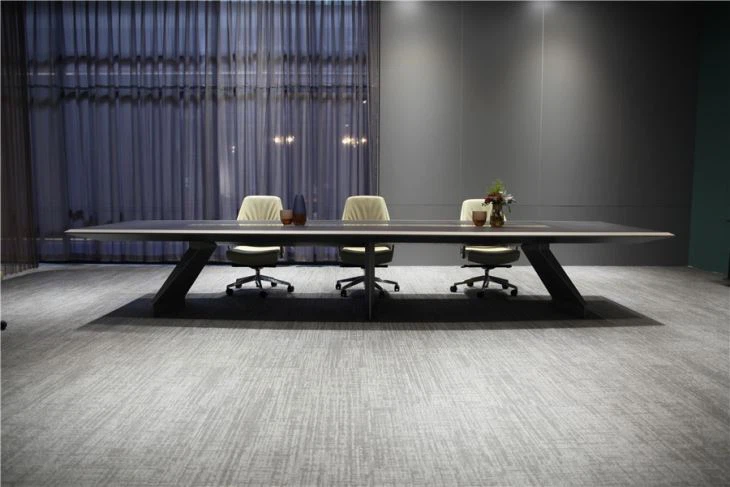
If you’re currently shopping around, whether you’re furnishing a new office or upgrading your tired old table, I’m here to help. We can walk through your space, your budget, and how you actually use your boardroom to pick the right thickness (and style, and material) that fits you, no pressure. No awkward sales pitches, just straight talk.
Office Cabinet References:
- Furniture Industry Research Association (FIRA). (2022). Standard Specifications for Commercial Tabletops. FIRA Global.
- American National Standards Institute (ANSI/BIFMA). (2021). Office Furniture Standards: Seating and Table Components. Business and Institutional Furniture Manufacturers Association.
- Wood Database. (2023). Solid Wood Tabletop Thickness Guidelines for Long-Term Durability. Wood Technology Publications.
- Architectural Record. (2022). Specifying Commercial Furniture for Corporate Boardrooms: Sturdiness and Aesthetics for High-Traffic Spaces. Retrieved from industry furniture design archives.
Hangzhou Workraum Space Co., Ltd.
Address: No109,Shunda Road.Yangshuwan Luoshe Town, Deqing Huzhou City Zhejiang, China
E-mail: maya@gevanco.com
WebSite: https://www.gevancofurniture.com/
