If you’re like most folks in industrial gear—plant managers, electrical techs, guys hauling equipment across job sites—you’ve probably stared at a pile of wired connectors and groaned. The mess of cables, the constant fraying at the ends, the way a bad crimp can bring an entire assembly to a halt at 2 a.m. when you’re trying to get production back online. That’s where wireless industrial connectors come in, and as someone who’s been in the connector supply game for a decade, I get the questions all the time: How do these things even work? Are they reliable enough for a factory floor, not just a home Wi-Fi setup? Let’s break this down, no fancy jargon, just straight talk. Industrial Connector

First, let’s clear up a myth: wireless industrial connectors aren’t just “connectors without cables.” They’re specialized, rugged devices designed to replace traditional wired connections for power, data, or signal transfer in industrial environments—think factories with heavy machinery, mining sites, remote pipeline monitoring, or even food processing plants where washdowns are non-negotiable. Regular Wi-Fi adapters won’t cut here; they’ll drop out when a forklift rumbles past, fry if a cleaning hose sprays them, or lag so bad a robotic arm will miss its target. These wireless units are built from the ground up to handle the chaos of industrial work.
So how do they work? Let’s start with the basics of how any wireless device talks, but tweak it for industrial needs. Unlike a laptop that connects to a coffee shop’s router, these connectors use a combo of radio waves, modulation techniques, and strict frequency rules. Wait, modulation is just a fancy word for “fancy coding to send information” — basically, we turn data or power signals into a radio wave that bounces between two units: one acts as the transmitter (sends the signal), the other as the receiver (picks it up). But we can’t use whatever frequency we want here. Industrial setups use ISM bands—Industrial, Scientific, Medical bands—since those are unlicensed, so we don’t have to deal with paying for a radio license, which keeps costs down. Common ones are 2.4 GHz and 5 GHz, but for really tough jobs (like long range or cutting through thick steel walls), some use sub-GHz frequencies (around 900 MHz or lower). Those waves penetrate metal better, go farther, and don’t bounce all over the place like higher frequencies, which is a huge win for factory floors with heavy equipment walls everywhere.
But here’s the part that makes them not flaky: they’re not like your home Wi-Fi. Home Wi-Fi uses open protocols that can get tangled with neighbors’ networks or microwaves. Industrial connectors use proprietary or standardized protocols that are locked down. For example, Wi-Fi Industrial (Wi-Fi I) is a version that’s tested for 99.999% uptime, which means less than 5 minutes of downtime a year. Even better, they use a thing called “error correction coding” — if a radio wave gets knocked off course by a passing forklift, the unit can fix the mistake instead of dropping the whole signal. Wired connectors send a physical current, so if a wire frays, the signal dies. Wireless connectors send multiple copies of the same signal on slight different frequencies at once—called “diversity” — so even if one copy gets blocked, another gets through. That’s why they’re way more reliable than most people expect.
Next, power. Wait, some wireless connectors don’t just send data—they send power, too? That’s a big one. For industrial sensors mounted 100 feet up a conveyor belt, running a power cable is a pain—you have to fish it through metal, risk damage from heavy equipment. Wireless power transfer (WPT) for these units uses inductive coupling, basically two coils: one in the transmitter, one in the receiver. You run current through the transmitter coil, which creates a magnetic field, and the receiver coil picks that up and turns it back into power for the sensor. It’s not like wireless phone charging (which is shorter range, usually), industrial WPT can go up to a few feet, and can power low-power sensors (temperature, vibration) without any cables. Some units even combine power and data over the same wireless link—so one signal does both, no extra hardware, that cuts down on setup time a ton.
Now, the stuff that makes these connectors work in rough environments, not just a desk. You can’t just stick a regular wireless router in a factory and call it a day. These units have to be rated for IP67 or IP69K. What’s that? IP67 means dust-tight and can be submerged in up to 1 meter of water for 30 minutes—great for washdowns in food plants. IP69K is even tougher: it can handle high-pressure, high-temperature water jets (like the ones used to clean heavy machinery) from any angle, so no water gets inside to fry the circuit board. They also have to handle extreme temperatures, from -40°F in a cold storage warehouse to 185°F in a steel mill, plus vibration from heavy machinery that would shake a consumer router apart. The casing is usually aluminum or stainless steel, way sturdier than the plastic you get on home gear.
Another key part: pairing. Wired connectors use a physical plug to “pair” two devices—you plug them together, they make a solid connection. Wireless industrial connectors do the same thing, but over the air. When you set them up, you link the transmitter and receiver with a secure key, so they only talk to each other, not random devices nearby. That prevents hackers from messing with factory equipment (which is a real concern these days) or signal interference from other wireless tools on the job site. Some even have “fast roaming” — if a sensor needs to move between two access points on a conveyor, the handoff is so fast the data doesn’t drop. Wired connectors have a fixed path; wireless adapts to movement, which is perfect for things like robotic arms that slide back and forth along a line.
Wait, let’s talk about the drawbacks, because no tech is perfect. They don’t work for high-power heavy machinery that needs hundreds of amps—wire transfer can only do so much right now, so for a 500-horsepower motor, you still use a wired connector. They also have a maximum range: most are between 10 meters (33 feet) for high-speed data, up to 1 kilometer (0.6 miles) for low-power sensors. If you need to go farther than that, you add a repeater, which is a smaller wireless unit that picks up the signal and passes it along. And in really dense environments—like a factory with a hundred wireless devices going at once—you have to plan the frequency band properly, otherwise you can get lag. But that’s not a flaw in the tech, that’s just good setup.
As a supplier, I’ve seen why companies switch to these. Last year, a food processing plant we work with was dealing with 20-30 failed wired connectors a month from washdowns—costing them thousands in downtime and replacement parts. We swapped their old wired temperature sensors for wireless connectors, and dropped failures to zero. Another customer, a mining company, had a remote pipeline monitoring site where running power cables was impossible, so wireless power/data connectors let them track leaks 24/7 without laying miles of cable.
If you’re on the fence about making the switch, here’s what to consider first: what are you connecting? Sensors? Robotics? Low-power devices? How far apart are they? What’s the environment like—dusty, wet, cold? We help guys all the time figure out the right unit, no one-size-fits-all here.
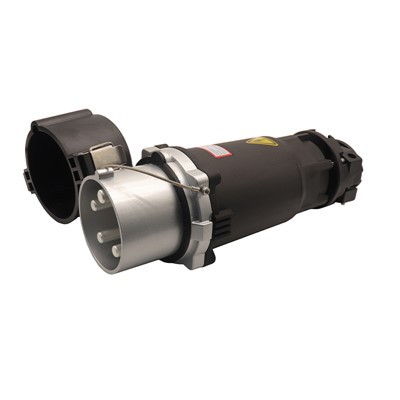
I get it, trying a new connector tech can feel risky. You’ve got a production line to run, you can’t afford to test something that might break. But these aren’t consumer gadgets—they’re built for 10+ years of heavy use, with test reports that prove their uptime. If you’re tired of frayed cables, time-consuming installations, or unplanned downtime from bad wired connections, let’s talk. We can walk through your specific setup, show you case studies from similar facilities, and get you a quote with no hidden fees.
Industrial Plug and Socket References
- Industrial Wireless Alliance (IWA). "Wireless Connectivity for Industrial Automation: Standards and Best Practices." 2022.
- International Electrotechnical Commission (IEC). "IP Code Classification for Electrical Equipment." IEC 60529, 2021.
- IEEE 802.11 Industrial Working Group. "Wi-Fi for Industrial Applications: Reliability and Performance Metrics." IEEE Transactions on Industrial Informatics, vol. 18, no. 4, 2022, pp. 2456-2465.
- Wireless Power Consortium (WPC). "Industrial Wireless Power Transfer: Requirements and Use Cases." WPC Technical Report TR-10, 2023.
- Occupational Safety and Health Administration (OSHA). "Industrial Equipment Connectivity: Risk Mitigation for Wireless Systems." OSHA Safety Bulletin 12-01, 2021.
Zhejiang Hefeng Electric Co., Ltd.
Zhejiang Hefeng Electric Co., Ltd. is one of the most professional industrial connector manufacturers and suppliers in China, featured by quality products and low price. Please rest assured to buy durable industrial connector made in China here from our factory. Also, OEM service is available.
Address: Wenzhou Daqiao Industrail Park, Beibaixiang Town, Yueqing City, Zhejiang Province, China
E-mail: hefengplug@chinahfe.com
WebSite: https://www.hfcee.com/
