Hey there, if you’ve ever worked with flanges, pressure vessels, or big industrial piping, you’ve probably run into stud bolts—those long, threaded fasteners that hold critical components together. But measuring them right isn’t just a checkmark on a to-do list; mess this up, and you’re looking at leaks, downtime, or even safety hazards. As a stud bolts supplier, I’ve seen it all—from guys grabbing a tape measure that’s only reading inches wrong to engineers mixing up thread pitches. Today, I’m breaking down exactly how to measure stud bolts like a pro, no fancy degree required. Stud Bolts
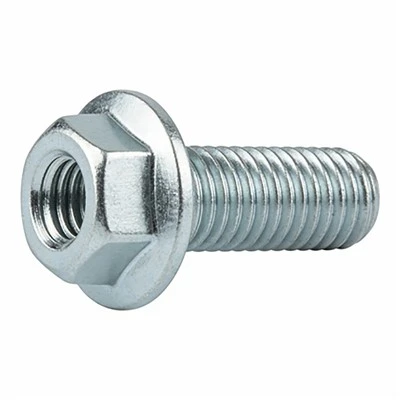
First, let’s cut through the basics: what actually defines a stud bolt? Unlike a regular bolt with a head, stud bolts are fully threaded (or almost fully threaded) on both ends, with no hex head or drive slot. They’re meant to be screwed into one component (like a pressure vessel’s flange hub) and then a nut tightens onto the other end to clamp everything down. That’s why measuring them isn’t just one number—it’s multiple parts that all have to line up.
Let’s start with the numbers that matter most: length. Wait, not just any length—most people mess this up right here. You might grab a tape and measure from end to end, but that’s half the story (or half the mistake). Stud bolt length is always measured from the end of one thread to the end of the other, right? No, hold on—wait, no, wait. Wait, let’s clarify: if it’s a stud bolt for flanges, the standard measurement is the overall length, but wait—no, let’s get specific. If your stud has threads that stop just short of the ends (some have a “partial thread” runout for tool engagement), you measure the straight shank? No, no—wait, no, I’m overcomplicating. Let’s use the real-world examples I see every day. Last week, a customer sent back 50 stud bolts because he measured from shoulder to shoulder, not end to end. That guy’s gasket was thicker than he accounted for, so he needed longer studs. Here’s the rule: measure parallel to the threads, from the very tip of one end to the very tip of the other. No curves, no skips, just straight. If there’s a smooth unthreaded shank in the middle (some high-strength studs have this to prevent over-tightening), you still measure total end-to-end length— that shank is part of what clamps the joint, so it counts. Pro tip: use a vernier caliper here, not a standard tape. Tape stretches, bends, and if you’re working with 12-inch studs, even a 1/16-inch error adds up. A caliper will get you within 0.001 inches, which is non-negotiable for industrial use.
Next up: thread size. This is where 90% of newbies trip. Thread size isn’t just “1 inch”—it’s two parts: nominal diameter and threads per inch (TPI). Wait, let’s break that down. Nominal diameter is the general “size” of the thread, but TPI is how many threads are packed into every inch of length. For example, a 1"-8 stud has 8 threads per inch, while a 1"-12 has 12. Mix those up, and the nut won’t screw on—simple as that. How do you measure TPI? Grab a thread pitch gauge (super cheap, we sell them in our shop for like $5) or do the old-school trick: lay the stud on a piece of paper, press it down hard, mark the threads along an inch, count how many peaks there are. That’s your TPI. For metric studs, it’s thread pitch in millimeters (distance between two adjacent threads), not TPI—so if you’re working with metric, use a pitch gauge for metric threads, not imperial. One more thing: don’t assume all threads are the same. Coarse thread (UNC) is for general use, fine thread (UNF) is for tighter, high-vibration applications. That letter code after the size (UNC/UNF) matters too—we had a customer last month who bought UNC instead of UNF for a pipe line in a refinery, and the nuts kept working loose. Cost him $2k in downtime. Ouch.
Then there’s shank diameter. Wait, why is this separate from nominal diameter? Because on some stud bolts, especially those for high-pressure flanges, the shank (the smooth part if there is one) is a bit thicker than the thread diameter? No, wait—no, most are the same, but sometimes, for “reduced shank” studs, the shank is smaller. Wait, no, let’s keep this simple for folks: if your stud is fully threaded all the way, the shank diameter is the same as the thread nominal diameter. But if there’s a smooth part, measure that with the caliper—if it’s off by even 0.005 inches, the stud won’t fit through the flange holes. Flange bolt holes are precision-drilled, so a stud that’s too big won’t slide in, and too small creates play that weakens the clamp force. We once had a plant manager call in a panic because his studs weren’t fitting through the flanges—turns out he’d measured the thread diameter, not the shank. Threads are slightly smaller than the major diameter (the big part of the thread), so if you use thread size for shank, you’re shortchanging yourself. That’s a common mix-up.
Now, let’s talk about the stuff that doesn’t show up on a blueprint, but will save you headaches: surface finish and material grade. Wait, is this “measuring”? Kind of—because if you get these wrong, even a perfectly measured stud is useless. For example, if you need a stud for a 10,000 PSI vessel, a Grade 2 stud (soft, for low stress) is going to snap when you torque the nut. How do you measure grade? For carbon steel studs, there’s a marking on one end—three radial lines mean Grade 5, six lines mean Grade 8, B7 is a common alloy steel grade with a square notch. If there’s no marking, use a hardness tester (again, cheap tool) to check—B7 studs should be around 28 HRC, Grade 5 is 19-22 HRC. For stainless steel studs, 316 is better for corrosion, 304 is standard, so check the material certification if you’re unsure—don’t guess here, especially if it’s for food and beverage or chemical processing.
Wait, let’s throw in a real customer story here to make it relatable. A few months back, a maintenance supervisor at a power plant ordered stud bolts, but when they arrived, he took them out, measured, and said “these are wrong”—they were half an inch too short. Turned out, he was measuring the length from the end of the thread to where the thread stopped, not all the way to the other end. That’s when I realized: most instructions online skip the “where to start and stop measuring” part—they just say “length” and leave you hanging. So let’s make that crystal clear: for ASME B18.2.1 (the standard for studs), the length is always the overall length, end-to-end, regardless of thread runout. If the blueprint says “6 inch stud,” that’s 6 inches total, not the threaded part. That’s a rule we drill into every order we ship, because we’ve seen the mistakes.
Another common mismeasurement: thread length. Some people measure the entire threaded part, but for stud bolts, thread length on each end matters for engagement. If you screw a nut on only two threads, it’s going to pull out under load. ASME says thread length for studs up to 4 inches is 2x the nominal diameter plus 1/4 inch; for longer studs, it’s 2x nominal plus 1/2 inch. So for a 1-inch stud, each end should have at least 2.25 inches of thread. If you’re measuring thread length, use the caliper to count how many inches of actual thread (not shank) are on each end—skip the smooth parts.
Now, what about tools you actually need? You don’t need a lab setup. Here’s the basic kit I recommend: a digital vernier caliper (way better than a analog one, less human error), a thread pitch gauge (has both imperial and metric), a hardness test pen (super easy to use, no training), and a good set of caliper rules (for quick checks if you’re on the job site). Skip the cheap plastic tools—they’ll bend or break, and you’ll get bad measurements. We’ve had guys bring in broken thread gauges because they tried to use a screwdriver instead of the gauge, so save yourself the $10 and just buy the real thing.
Wait, let’s address edge cases, because studs aren’t one-size-fits-all. What about “double-end studs” vs “studs with one end tapered”? Tapered studs (used for flanges that require a tight fit) have a tapered end—so you measure the big diameter at the base of the taper, not the small tip. If you measure the tip, the nut will be too loose. And for studs used in oil and gas, there’s also “full thread” vs “partial thread”—full thread is exactly what it sounds like, threads all the way, partial thread has a smooth shank. Again, measure end to end, but confirm thread length per your spec.
Now, let’s wrap this up with the stuff that matters for you, whether you’re a plant manager, maintenance tech, or engineer. The number one mistake I see? Assuming you can wing it. Last week, a guy measured a stud with a tape, got it 1/8 inch short, and when he tightened the nut, the stud snapped—cost him $5k in repairs and 3 days of downtime. It’s not worth cutting corners on measurement. If you’re not sure, order a sample first. We always let customers order a single stud to test before buying a bulk order—no strings attached.

At the end of the day, stud bolts are the unsung heroes of industrial equipment. Measure wrong, and you’re looking at leaks, explosions, or lost time. Do it right, and they’ll hold everything together for years. If you’re working on a project and need to double-check measurements, or you’re ready to order studs that are measured correctly the first time, hit us up. We’re not just a supplier—we’ve been in the game for decades, and we’ll help you get the right studs, right size, every time.
Nuts References:
- ASME B18.2.1-2019, Fasteners – Bolts, Studs, and Screws, American Society of Mechanical Engineers.
- Machinery’s Handbook, 31st Edition, Industrial Press Inc., 2020.
- NACE MR0175/ISO 15156, Petroleum, Petrochemical and Natural Gas Industries – Materials for Use in Sulfide Stress Cracking Environments, National Association of Corrosion Engineers, 2021.
Handan Jihao Fastener Co., Ltd.
We’re known as one of the most professional stud bolts manufacturers and suppliers in China. With abundant experience, we warmly welcome you to wholesale customized stud bolts made in China here from our factory. If you have any enquiry about cooperation, please feel free to email us.
Address: A2, Row 31, Feiyu Screw World, Hebei Pu, Linmengguan Town, Yongnian District, Handan City, Hebei Province
E-mail: wenzhaona0@gmail.com
WebSite: https://www.chinaboltnut.com/
