If you’re in the thermoforming game, you’ve probably stared at a three station thermoforming machine specs sheet at some point, squinting at the wording around forming area like it’s some kind of secret code. As a supplier who’s been helping brands pick the right kit for 12 years now, I get it—this question (and the confusion around it) comes up at least twice a week, usually when someone’s mid-project and panicking because their current machine can’t handle a bigger part, or they’re sizing a new line and don’t want to waste cash on something too small (or way too big). Let’s break this down like we’re geeking out over a machine we actually use on our own test runs, no stuffy jargon or vague sales fluff. Three Station Thermoforming Machine
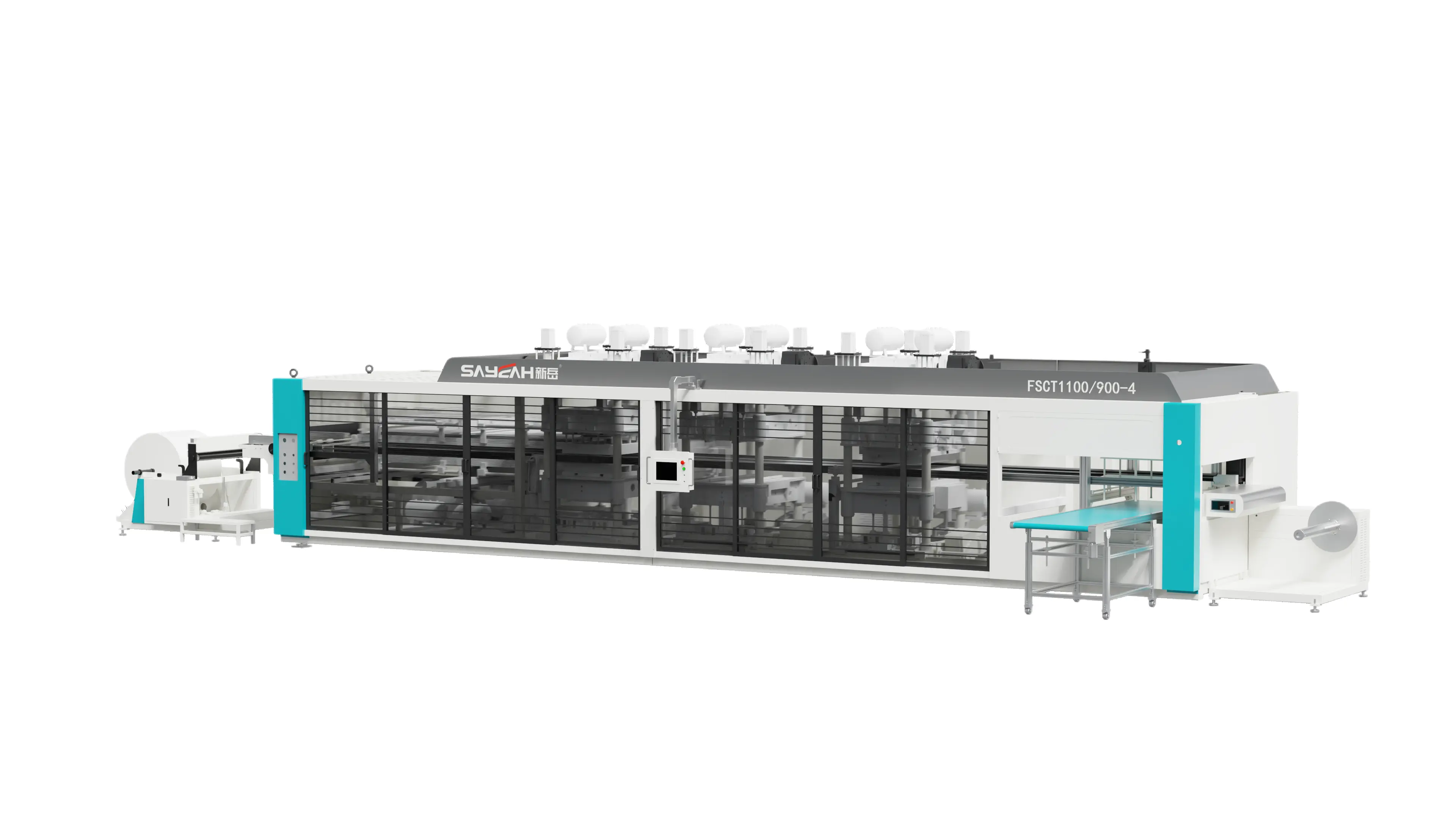
First, let’s make sure we’re on the same page: a three station thermoforming machine isn’t a one-size-fits-all. It has three core stations—load, heat, form/cool, unload, right? The “maximum forming area” isn’t some random number a manufacturer pulls out of thin air. It’s the single biggest rectangle (or sometimes circle, but 99% of the time it’s rectangle) of plastic sheeting you can fit through the machine, heat evenly, and form into a part without overlapping the clamps or the edge trim that gets cut off later. But here’s the thing most people don’t realize: that number isn’t written the same way by every brand. Some suppliers list the full machine bed size, others just the heating zone, and a few still use old imperial units even when everyone’s switched to metric. I’ve seen a customer come to me last year excited that a machine had a “1200mm forming area” only to realize it measured from the edge of the frame to the other edge, not the usable space between the clamping rails—total wasted time for them.
So, what’s the real maximum for these machines? Let’s cut to the chase: for standard industrial three station thermoformers (the ones used for blister packs, disposable food containers, automotive interior trim, cosmetic clamshells, that stuff), the sweet spot maximum usable forming area is usually between 600mm x 800mm and 1200mm x 1400mm. Wait, hold on—don’t roll your eyes yet. That’s the usable space, not the total machine footprint (which is way bigger, like 3 meters long for a 1200mm machine, fyi). But before you think “great, I need the biggest one,” there are caveats that actually matter way more than the number itself.
First: part complexity. If you’re making a shallow blister for a toothpaste tube, you can probably hit near that max area with no issues. But if you’re deep-drawing something—like a disposable food container with a 50mm deep side wall, or a complex automotive interior trim piece with tight curves—you can’t use the full forming area. When you pull heated plastic down into a mold, it stretches. If you’re already using 90% of the forming area, the plastic will thin out way too much on the edges, leading to weak parts that crack or leak. We had a client a few months back designing a 1000mm wide pet food bowl; they tried cramming the full 1200mm forming area and ended up with bowls that split along the sides. We adjusted their mold size to 1100mm wide, dropped their area by just 100mm, and suddenly their defect rate went from 18% to under 2%. That’s the real tradeoff here—maximum area isn’t the same as maximum usable area for your part.
Next: material type and thickness. Thin plastic (like 0.2mm PVC for blister packs) is way more flexible than thick, rigid PET (1.5mm for food containers). You can stretch thin plastic more evenly, so you can use closer to the maximum forming area. But thick material needs more support when it’s being heated, so the clamping rails (the things that hold the sheet tight while it heats) take up more space at the edges. That cuts into your usable area. We had another client making thick HDPE industrial parts—their max forming area ended up being 1000mm x 1200mm, not the advertised 1200mm x 1400mm, just because the thick sheet needed extra clamping force and space to sit flat.
Then there’s machine station design. The three core stations—load, heat, form—they all have to align, and their individual sizes impact the maximum forming area. The heating station, for example, has to cover the full width of the sheet you’re forming. If your load station is smaller than your heating station, you can’t feed a wider sheet into the machine, right? Same with the form station: the mold has to fit inside that station, so if the form station is smaller than the heat station, that’s your limit, not the heat station. Some cheaper three station machines cut corners by making the form station smaller to save on cost, which means their advertised “max forming area” is actually just the heat zone, not the space you can actually use for molds. That’s why we always test a potential machine’s forming area with a small mold run before we recommend it—we don’t want our clients to get stuck with a number that looks good on paper but doesn’t work for their parts.
Wait, what about smaller or larger than that range? Can you get a three station machine with a 400mm x 600mm forming area? Absolutely—those are perfect for small parts, like cosmetic clamshells or medical device blisters. We sell a lot of those to startups or small manufacturers who don’t need big parts. And have we seen any with a forming area bigger than 1200mm x 1400mm? Yeah, but those are custom builds, not standard off-the-shelf machines. Custom ones come with way longer lead times and way higher price tags, so unless you’re making something like a large industrial pallet cover that needs that size, the standard max is fine.
Here’s a big mistake I see people make all the time: they pick their machine based on maximum forming area alone, not part output. Let’s say you need 500 blister packs a minute. If you pick the smallest forming area machine for that part, you might have to run the sheet at a super slow speed to keep up, which kills production time. If you pick a slightly larger forming area, you can run two blisters side-by-side on the same sheet, doubling your output without speeding up the machine. That’s a game-changer for manufacturers looking to scale without buying extra lines. But only if you use that extra forming area—don’t buy a huge machine just because the number is big, that’s just throwing money away.
Another thing: trim waste. The forming area is the part of the sheet that gets shaped, but you have to leave space around it for the trim die that cuts the part out after forming. That trim is recyclable, but it’s still waste you have to handle. So when you calculate your actual usable part area, you have to subtract that trim space. Usually, trim is about 20mm to 50mm on each side, so that’s another 40mm to 100mm total you lose off each dimension. So a 1200mm forming area might only give you a 1100mm part width once trim is done. That’s a key detail to check when you’re looking at specs—does the manufacturer list the forming area before or after trim?
Let’s also talk about real-world test data, not just specs. Last quarter, we tested three different standard three station thermoformers from leading brands to confirm their forming areas. Machine A claimed 1200mm x 1400mm; when we ran a test mold of 1100mm x 1300mm, it worked perfectly with only 10% edge thinning. Machine B claimed 1000mm x 1200mm, but we found we could go to 1050mm x 1250mm with thin PET because the clamping system was tighter. Machine C, a cheap import, claimed 1100mm x 1300mm, but when we tried that, the sheet pulled away from the clamps on the sides, so max was only 1000mm x 1200mm. That’s why test runs are non-negotiable—advertised numbers don’t always match what you can actually use.
So, to circle back to the original question: what’s the maximum forming area of a standard three station thermoforming machine? It’s not a single number. It’s between 600mm x 800mm and 1200mm x 1400mm for off-the-shelf industrial models, but that number shifts based on your part, material, and machine build. Custom machines can go bigger, but they’re rare and pricey. The key isn’t chasing the largest number—it’s picking the machine’s forming area to match your current parts, with a little room to grow if you plan to scale or add new products.

If you’re in the market for a three station thermoforming machine and want to get this right, don’t just look at the spec sheet number. Bring your part files, tell us what materials you’re using, how much output you need, and we’ll walk you through exactly what forming area works for you. We do test runs all the time, no pressure, just real data so you don’t waste cash on a machine that’s too big, or too small. Hit us up to chat through your project.
Plastic Cup Thermoforming Machine References
- Throne, J. L. (2008). Thermoforming: Principles and Practice. Carl Hanser Verlag.
- Society of Plastics Engineers (SPE). (2021). Thermoforming Equipment Specification Standards. SPE Thermoforming Division.
- Davis, D. (2019). Practical Guide to Industrial Thermoforming. Industrial Press Inc.
Zhejiang Sayeah Machinery Co., Ltd.
Zhejiang Sayeah Machinery Co., Ltd. is one of the most reliable manufacturers and suppliers of three station thermoforming machine in China, also supports high quality customized service. Please feel free to buy CE approved three station thermoforming machine from our factory. For price consultation, contact us.
Address: Wanquan District Industrial Zone,West Of China National Highway 104, Sunlou Village, Wanquan Town, Pingyang County, Zhejiang Province. China
E-mail: sales@sayeahmachinery.com
WebSite: https://www.sayeahthermoforming.com/
