If you’ve ever ordered stacking plastic drums for industrial storage, shipping, or waste handling, you know that picking the right one isn’t just about price or color. As a stacking plastic drum supplier who’s been in this space for 12 years, I’ve seen too many clients get burned by drums that crack under pressure, leak during transit, or collapse when stacked high in a warehouse. Last quarter, I had a small manufacturing client who switched to a cheaper, untested drum for their chemical waste and ended up with 30 ruined pallets after drums cracked mid-transit. That’s why today I’m breaking down the exact, science-backed tests I run on every drum that leaves our facility—no shortcuts, no fluff. These tests are the ones our quality team uses, and they’re the same ones we recommend you verify before placing a bulk order. Stacking Plastic Drum

First, let’s start with the foundation: material testing. Stacking plastic drums aren’t made from the same plastic as a water bottle. Most industrial stacking drums use high-density polyethylene (HDPE), but not all HDPE is equal. Cheaper suppliers often mix in recycled plastic that’s brittle, or cut corners on resin grade to save a few cents per unit. The first test I run in our in-house lab is melt flow rate (MFR) testing. MFR measures how easily the plastic melts when heated—HDPE for stacking drums needs a low MFR (usually between 0.2 and 0.8 g/10min at 190°C) because a lower MFR means the plastic is denser, stronger, and more impact-resistant. We test three random drums from every production batch: we cut a small, standardized sample from the drum wall, melt it in a MFR tester, and measure how much plastic flows through a tiny die in 10 minutes. If the MFR is too high, that batch gets rejected. Last year, we caught a batch where the supplier accidentally used a resin with a 1.1 MFR—those drums would’ve cracked when stacked 6 high, so we scrapped the entire 2,000-unit run instead of shipping them.
Next, impact testing, which is non-negotiable for stacking drums. These drums get dropped during loading, get knocked off pallets, and take hits from forklift forks all the time. If they don’t pass impact testing, they’re not safe to use. We use two types of impact tests for stacking drums: drop test and pendulum impact test. The drop test is the real-world scenario: we take a fully assembled, empty drum, and drop it from a height of 1.2 meters (about 4 feet) onto a concrete surface, hitting the most vulnerable part first—usually the base’s corner, or the side wall halfway up. For drums designed to hold hazardous materials, we use a 1.5-meter drop. After dropping, we inspect for cracks, splits, or any deformation that would make the drum leak. We also test when the drum is full, since full drums are heavier and more likely to crack if dropped. Last month, a new client asked us to rush a batch of drums for their food processing plant, and we did a mid-batch drop test on a random drum—it split along the side wall. We traced it to a minor mistake in the injection molding temperature, fixed it in 24 hours, and shipped the batch on time, but we never would’ve caught it without the test. The pendulum impact test is for a more controlled measurement: we mount the drum horizontally, swing a 2kg (4.4lb) pendulum into the side at a set speed, and measure how much force it takes to crack the wall. Our drums need to withstand at least 10 Joules of force at room temperature, and 8 Joules at cold storage temperatures (4°C/39°F) since many clients store drums in unheated warehouses.
Then there’s stacking strength testing—this is the whole point of a stacking plastic drum, right? The name says stacking, so if it can’t hold weight when stacked, it’s useless. Stacking strength is measured by putting weight on the top of the drum, simulating the pressure of being stacked 5, 10, or even 15 high in a warehouse. We use a universal testing machine (UTM) for this: we place the drum on a rigid base, then apply a uniform, increasing load across the top surface using a flat metal plate. We stop the test when we see deformation (usually when the side walls start to bow) or when the load reaches the rated stacking capacity. For our standard industrial stacking drums, the rated stacking capacity is 500kg (1,100lbs) per drum, and we test each drum to withstand at least 20% more than that—so 600kg—before failing. For heavy-duty drums, which are designed for stacking up to 10 high, we test to 1,200kg (2,645lbs). A common mistake cheaper suppliers make is only testing empty drums for stacking strength, but full drums add weight, and cold weather makes plastic stiffer and less flexible, so we test both empty and full drums, and at both room and cold temperatures. A few years back, we had a client who stored drums in a cold storage warehouse at -10°C (14°F) and complained that drums stacked 8 high collapsed. We did a test on their old drums and found they only withstood 300kg at cold temps—way below our 600kg standard. We replaced them with our heavy-duty cold-weather drums, and they haven’t had a problem since.
Leak testing is another critical step, especially if your drums are for shipping hazardous liquids, chemicals, or food products. A leaking drum doesn’t just cause mess—it’s a safety hazard, and it can result in fines for non-compliance with regulations like UN standards. We use two leak tests: vacuum test and pressure test. For the vacuum test, we seal the drum tightly, then attach a vacuum pump that pulls air out of the drum until the internal pressure is 20 kPa (about 3 PSI) below atmospheric pressure. We hold that pressure for 5 minutes, and if the pressure drops more than 1 kPa in that time, the drum has a leak—either from a bad weld, a faulty bung, or a pinhole in the wall. For liquids, we also do a water immersion test: we fill the drum 90% full with water, seal it, submerge it in a water tank, and apply a small amount of air pressure (10 kPa) to the inside. If bubbles come out, that’s a leak. We test every batch, not just samples, because even a small flaw in the injection molding process can create a pinhole that would slip through a sample test. Last year, we caught a batch with a faulty bung seal—12 drums in the batch had a tiny gap where the bung attaches, and we caught them during the pressure test before they left our facility.
Another test that’s often overlooked is UV resistance. If you’re using stacking drums outdoors, for things like rainwater collection, construction waste, or agriculture, the plastic can break down when exposed to sunlight. UV rays cause HDPE to become brittle, fade, and crack over time—even if the drum passed all the indoor tests. We do accelerated UV aging tests in our lab to simulate years of sun exposure. We put drums in a UV chamber that uses artificial UV light (280–400 nm, the same as sunlight) and controls temperature and humidity. After 1,000 hours of exposure (which is equivalent to about 5 years of outdoor use in sunny climates like Florida or Southern California), we run our impact and stacking tests again. If the drum cracks or loses more than 10% of its stacking strength, it’s not suitable for outdoor use. We add a UV stabilizer to all our outdoor-grade drums, but we still test every batch to make sure the stabilizer is mixed evenly during production. A client in Arizona once ordered drums for outdoor compost storage, and we did a mid-batch UV test that showed the stabilizer was unevenly distributed in 8 drums—we fixed the mixing process, and those drums are still in good shape after 7 years of use.
Now, I know what you’re thinking: “This is all great, but how do I do these tests myself if I don’t have a lab?” Well, you can run simple, at-home or on-site tests to check drum quality before you buy. First, check the labeling: reputable suppliers will print the resin type (HDPE), the stacking capacity, and any compliance standards (UN, FDA, etc.) on the drum’s base or side. If there’s no labeling, that’s a red flag. Then, do a visual inspection: run your hand along the drum wall, looking for thin spots, uneven molding, or scratches. Thin spots are a sign the supplier used too little plastic during production, which makes the drum weaker. Next, the “press test”: push hard on the side wall with your thumb. If it dents easily or flexes more than an inch, that means the plastic is too soft or the wall is too thin. For stacking capacity, if you can stack 2–3 empty drums on top of each other and they feel wobbly or start to bow, they’re not suitable for high stacking.
As a supplier, I’ve built our business on being transparent about these tests. We post our test results for every batch on our order portal, so clients can see exactly how the drums they’re getting performed. We also offer third-party testing for large orders, so if you want an independent lab to verify the quality, we’ll work with your chosen provider at no extra cost.
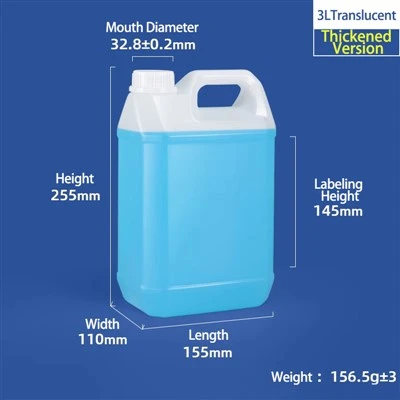
At the end of the day, the quality of stacking plastic drums isn’t just about durability—it’s about safety, cost, and reliability. A cheap drum that cracks or leaks mid-job will end up costing you more in lost materials, repairs, and fines than investing in a high-quality, tested drum upfront. If you’re in the market for stacking plastic drums, or you want to discuss custom sizes, grades, or testing for your specific application, don’t hesitate to reach out to our team for a consultation. We’ll walk you through our process, share test data, and make sure you get drums that meet your needs.
Plastic Parts References
American Society for Testing and Materials (ASTM). Standard Test Methods for Impact Resistance of Rigid Plastics. ASTM D256-22, 2022.
United Nations. Recommendations on the Transport of Dangerous Goods: Packaging. UN Manual of Tests and Criteria, Part 4, 20th Edition, 2021.
Plastics Industry Association (SPI). Guide to Industrial Plastic Storage Drums, 2023.
International Organization for Standardization (ISO). Plastics – High-Density Polyethylene (HDPE) Molding and Extrusion Materials – Classification and Designation. ISO 16152-19, 2019.
Jiangsu Xinhuasheng Packaging New Materials Co., Ltd.
Jiangsu Xinhuasheng Packaging New Materials Co., Ltd. is one of the most professional stacking plastic drum manufacturers and suppliers in China, featured by quality products and low price. Please rest assured to wholesale durable stacking plastic drum in stock here and get quotation from our factory. Customized orders are welcome.
Address: No. 5 Tieta Road, Industrial Park, Guyang Town, Dantu District, Zhenjiang City, Jiangsu Province, China.
E-mail: manager@jsxhsgs.com
WebSite: https://www.xhsibc.com/
