When we talk about molding main units, most people fixate on the precision of the injection nozzle or the tight tolerances of the mold cavity—two make-or-break factors for high-quality plastic parts, let’s be real. But anyone who’s worked in this industry long enough will tell you the unsung hero keeping that entire operation running smoothly is the cooling system. As a supplier of molding main units, I’ve spent the last 12 years troubleshooting overheating issues for clients across automotive, medical device, and consumer electronics sectors, and I can say without hesitation: a poorly designed cooling system isn’t just a minor hiccup—it’s the difference between a 95% production yield and a 60% scrap rate, not to mention 20% higher energy bills. Molding Main Unit

Let’s break this down plainly, no overly dense engineering jargon that makes your eyes glaze over. The molding main unit’s cooling system serves one core purpose: it pulls excess heat out of the mold and the molten plastic during the cooling cycle, which is the longest part of the entire injection molding process, by the way (usually 60-70% of the total cycle time). If that heat lingers, the plastic cools unevenly. You get warped parts, sink marks on surfaces, inconsistent wall thickness, or even part shrinkage that throws assembly lines off. For medical clients crafting disposable syringes, that kind of inconsistency isn’t just a production issue—it’s a regulatory headache. For automotive parts, a warped bumper can fail crash tests. So this system isn’t just add-on equipment; it’s integrated directly into the molding main unit’s design.
First, let’s talk about how the system is structured within the main unit, because that’s where it ties into everything else. Most modern molding main units have a closed-loop water cooling system, which is far more efficient than the old open-loop systems that wasted gallons of water daily and struggled with temperature stability. Here’s how it works: there’s a central chiller unit mounted to or adjacent to the main unit (we manufacture these components tailored to our main units, so they fit seamlessly), which circulates temperature-controlled water (usually 10-40°C, depending on the material) through a network of channels drilled directly into the mold half that attaches to the main unit. That water absorbs heat as it flows, then travels back to the chiller where it’s cooled again, and the cycle repeats.
Wait, but why can’t we just use plain tap water? Two reasons. First, tap water has minerals that build up scale in the channels over time—scale acts like insulation, slowing heat transfer and forcing the chiller to work harder. Second, plain water can cause corrosion in metal components of the main unit and mold, leading to leaks that shut down production. That’s why our team at the supplier recommends deionized or distilled water mixed with a small amount of corrosion inhibitor, a detail that saves clients thousands in maintenance costs annually.
Now, the key design features that make a molding main unit’s cooling system effective, not just functional. One big mistake we see clients and sometimes even other suppliers make is generic channel design. If you drill straight, uniform holes into a mold, the areas farther from the channels cool slower than the areas right next to them—this is called “thermal lag” and it’s the root cause of most cosmetic and dimensional defects. That’s why our main units are engineered with conformal cooling channels—these are curved, 3D-printed or milled channels that follow the exact contour of the mold cavity, so every part of the plastic is exposed to cooling water at the same rate. For example, a smartphone case’s curved edges cool at the same speed as its flat center, eliminating sink marks on the back of the case.
Another critical component is the temperature control unit (TCU) integrated into the main unit, not a separate add-on. Old systems relied on manual adjustment of water flow, which led to inconsistent temperatures across shifts—one operator might set the flow too low, another too high, and suddenly your production run is off. Our TCUs are digital, with precision sensors that adjust water temperature and flow in real time, maintaining a variance of less than ±0.5°C across the entire cooling cycle. That’s the kind of consistency medical and aerospace-grade parts demand, where a 1°C temperature shift can mean a part fails inspection.
Heat exchange is another make-or-break point. The cooling system’s efficiency depends on how well the water picks up heat from the mold and how well the chiller rejects that heat. That’s why we use high-grade aluminum or copper for the heat exchangers in our main units—those metals have far higher thermal conductivity than steel, so heat transfers faster. We also size the chiller exactly to the molding main unit’s capacity, not using a one-size-fits-all unit that’s either underpowered (can’t keep up with high-volume runs) or overpowered (wastes energy). Last year, we worked with a client that was using an oversized, generic chiller on a 500-ton molding main unit; after we swapped it for a properly matched system, their energy bills dropped 18% and their cycle time shortened by 12 seconds per part—adding up to 200 more good parts per day.
Now, let’s address a common misconception: the cooling system only matters for thermoplastics, right? Nope. We regularly work with clients molding thermoset materials, like epoxy for electrical components, where cooling happens slower and requires precise temperature control to prevent curing before the part is ejected. In those cases, our main units have integrated heated cooling channels that can warm the mold slightly at the start of the cycle to ensure even curing, then cool rapidly once the part is formed. It’s a dual-function system that’s only possible because the cooling network is built directly into the main unit’s core, not an afterthought.
Maintenance is tied directly to the cooling system’s performance, too, and that’s something we prioritize as a supplier. We include a quick-access filter in our main units’ cooling lines, so clients can flush out debris or scale without taking the entire unit apart. We also send quarterly maintenance checklists for our clients, covering steps like testing corrosion inhibitor levels, checking for flow blockages in channels, and calibrating the TCU’s sensors. Last quarter, a client in Texas called us because their cycle time had spiked by 15%—we walked their operator through a quick check, and they found a clogged filter that had reduced water flow by 40%. Replacing the filter fixed it, and they saved over $2,000 in potential scrap that month.
I want to be transparent here: no cooling system is perfect for every application. If you’re molding a very thin, small part, a simple straight-channel system might work, but for large, complex parts like automotive bumpers or medical device housings, conformal cooling is non-negotiable. That’s why we work closely with each client to design the cooling system alongside the molding main unit, not just install a standard system. For example, a client making custom insulin pen components needed 100% dimensional consistency across 500,000 parts a month—we designed a cooling system with 12 conformal channels tailored to the pen’s tiny, intricate cavity, which cut their scrap rate from 12% to 0.8% and allowed them to meet their FDA regulatory requirements on time.
As a supplier, we’ve learned over the years that clients don’t just buy a molding main unit—they buy a system that can run reliably, efficiently, and produce high-quality parts 24/7. The cooling system is the backbone of that reliability. It’s not a box you can check off; it’s a component that affects cycle time, energy use, scrap rates, and regulatory compliance. If your current system is causing warped parts, high energy bills, or unexpected downtime, it might not be the main unit itself—it’s the cooling system working against it.
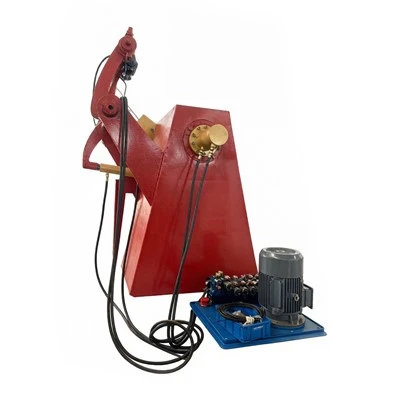
At the end of the day, the best molding main units in the world are useless if their cooling system can’t keep up with the demands of modern manufacturing. We’ve spent years refining our cooling system designs to integrate seamlessly with our main units, combining precision engineering, smart technology, and easy maintenance to solve real problems for our clients. If you’re working on a project where consistent, high-volume molding is critical—whether it’s automotive parts, medical devices, or consumer electronics—I’d encourage you to reach out to discuss how our main units and integrated cooling systems can fit your needs. There’s no one-size-fits-all solution, but there is a solution tailored to your exact production goals.
Shearing Machine References
Rosato, D. V., Rosato, M. G., & Rosato, D. V. (2007). Injection Molding Handbook. Springer.
Bralla, J. G. (1998). Handbook of Manufacturing Processes. McGraw-Hill.
American Society for Testing and Materials. (2019). Standard Guide for Temperature Control in Injection Molding. ASTM International.
Wuxi Yuanding Machinery Manufacturing Co., Ltd.
We’re well-known as one of the leading molding main unit manufacturers and suppliers in China, also support customized service. Please feel free to buy advanced molding main unit made in China here from our factory. For pricelist, contact us now.
Address: Yaguang Industrial Park, No. 88 Chaoyang South Road, Xishan District, Wuxi City, Jiangsu Province
E-mail: 13861798466@163.com
WebSite: https://www.wxyuanding.com/
