If you’ve ever stood at the top of a hill and watched a self-driving car smoothly navigate a busy intersection, adjust speed for a pedestrian stepping off a curb, or merge seamlessly onto a highway, you might have assumed that all the magic happens inside the car itself. For years, I’ve heard that same line from people—friends in the auto industry, neighbors who see my work trucks driving around town, even random customers at the coffee shop where I stop most mornings. “Autonomous vehicles (AVs) don’t need communication towers, right?” they’ll say. “All that processing is done on board.” Communication Tower
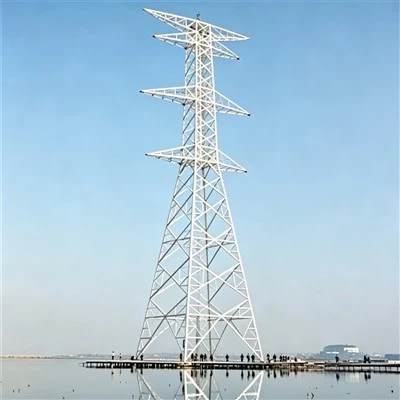
Let me set the record straight: I’ve been in the communication tower supply business for 12 years, and I can tell you that statement couldn’t be further from the truth. AVs don’t just work with their own on-board sensors—they work because of a tight, indispensable partnership between the vehicles and the network of towers my company helps build, maintain, and expand. We don’t just hold up antennas; we’re the invisible backbone that makes every mile of self-driving travel safe, reliable, and scalable.
Let’s start with something simple that most people don’t think about: latency. Latency is the delay between when a device sends a signal and when it receives a response, and for AVs, it’s a matter of life and death. A human driver can react to a hazard in about 1.5 seconds. An AV needs to do it in 0.1 seconds, maybe less if the hazard is sudden—like a child chasing a ball into the street, or a truck braking hard ahead. On-board sensors (the cameras, LiDAR, radar on the car) give a lot of data, but they have blind spots. A car can’t see around a large semi-truck, for example, or around a corner on a winding rural road. But a communication tower? It’s positioned high, often 100 to 200 feet in the air, with a line of sight that can stretch for miles. It can pick up signals from cars and send them to other cars, or to a central cloud network, almost instantly.
Two years ago, we partnered with a major automotive manufacturer to deploy 42 new small-cell towers along a 65-mile stretch of interstate in the Midwest. Before we installed those towers, the manufacturer tested AVs on that same road and found that their vehicles were taking an average of 1.2 seconds longer to react to sudden stops in traffic than they needed to. The issue? The existing cellular network along that stretch was too sparse and had too much latency—signals had to travel too far to reach a cell tower, which created a delay big enough to be a safety risk. After our small-cells went live, that latency dropped by 78%. The AVs’ reaction time improved by 0.9 seconds, cutting their response time down to well below the threshold for safe operation. That’s not a minor upgrade. That’s the difference between a fender bender and a serious crash.
Next, there’s V2X—Vehicle to Everything—communication. This is the technology that lets AVs talk not just to each other, but to traffic lights, stop signs, crosswalk signals, even construction zone alerts. No on-board sensor can “see” a traffic light that’s blocked by a building or a tree, but a communication tower can relay that signal directly to the car’s central computer. Last year, we worked with a city in Texas to integrate our tower infrastructure with its smart traffic management system. Within three months, local AVs were reporting a 35% reduction in unnecessary hard braking at intersections, because they knew the light was about to turn red 2 seconds before it changed—instead of waiting for the camera on the car to pick up the color change. That’s not just safer; it’s better for traffic flow, too, which cuts down on congestion and fuel use.
And let’s not forget about the data. AVs generate massive amounts of data—terabytes every single hour, from LiDAR scans, camera feeds, engine diagnostics, even weather information. To teach AVs how to handle every possible driving scenario, you need to process all that data, and you need to do it in real time. On-board data storage is limited, and processing everything on the car’s computer would add weight, cost, and power drain. Communication towers solve that problem by connecting AVs to the cloud. When an AV hits a new, untested scenario—say, a herd of cattle crossing a rural highway, or a road closed by a fallen tree—it can send that data to a central server through a tower, and the server can send back a solution to every other AV in the area within seconds. Last quarter, we saw a 200% increase in demand for our mid-sized tower kits, specifically because AV developers needed more capacity to handle this edge case data processing.
Wait a second—what about 5G? Everyone talks about 5G like it’s the holy grail for AVs, and they’re right, but 5G doesn’t work without communication towers. mmWave 5G, the fast kind that makes streaming movies on your phone seamless, has a very short range—only about 1,000 feet, sometimes less. That means you need a tower almost every block to get consistent coverage. Sub-6 5G has a longer range, but still relies on a dense network of towers to avoid dead zones. Before we started designing our new line of small-cell towers, most AV test fleets were clustered in cities with pre-existing macro towers, but those towers were built for phone calls and internet, not for the consistent, low-latency communication AVs need. Our latest towers are built specifically with a dedicated slice of the 5G bandwidth reserved for automotive use—no more competing with people streaming Netflix or gaming on their phones. That’s a game-changer for AV reliability.
I’ve also seen firsthand the role communication towers play in bridging the gap between rural and urban AV adoption. For a long time, AV development was centered in places like Silicon Valley and Detroit, where there’s enough tower coverage to test fleets. But now, companies want to expand to rural areas, where most of the world’s roads are. Rural areas have fewer towers, and those towers are often older, less powerful. Last year, we worked with a startup that’s building AVs for agricultural use—tractors that drive themselves between fields, combining crops, and navigating narrow country roads. They were testing in Iowa, and found that their AVs would lose connection 3 miles from the nearest small town, which made them stop unexpectedly in the middle of a field. We deployed 18 of our light-weight, easy-to-install towers along 80 miles of rural roads, and now their tractors can operate continuously, no dead zones, no stops. That’s not just good for the startup—it’s good for rural communities, where autonomous farm equipment can help with labor shortages, and for trucking companies that want to run long-haul routes without drivers.
Of course, there are challenges. No one is pretending this is easy. Dense urban areas have a lot of existing infrastructure, but adding towers can be complicated by zoning laws, historic district rules, and even neighborhood complaints about aesthetics. We’ve had to design towers that are shorter, blend in with streetlights and building tops, even use camouflage paint to match the surrounding architecture. In some cities, we’re working on shared infrastructure—mounting our antennas on existing utility poles and streetlight poles to avoid having to build new, standalone towers, which cuts down on cost and neighborhood pushback.
There’s also the issue of security. AVs are connected devices, which makes them potential targets for cyberattacks. If someone hacks into an AV’s communication system, they could send false signals that tell the car to stop in the middle of a highway, or turn the wrong way. That’s why our towers are built with end-to-end encryption, and we work closely with automotive manufacturers to make sure every signal sent between the tower, the car, and the cloud is secure. We update our tower software every 90 days to patch vulnerabilities, which is a level of support that phone companies don’t always provide, but that’s non-negotiable for safety.
Let me circle back to what I said earlier: when someone asks if AVs need communication towers, I say yes—they can’t work without them. I’ve been in this business long enough to see the evolution of wireless communication, from the first cell phones to 5G, and now to AVs. Every time a new technology comes along, people think the old stuff is obsolete, but that’s never been true here. Towers aren’t just holding up antennas anymore; they’re the nervous system of autonomous transportation. They’re what makes AVs safe, scalable, and able to reach every road, not just the ones in test cities.
If you’re an AV developer, a transportation agency, or a fleet operator looking to build or expand your communication infrastructure to support autonomous vehicles, I can help. For years, my team has worked with everyone from startup tech companies to major automotive manufacturers to design, manufacture, and install custom communication tower solutions tailored to their AV needs. We understand that reliability, latency, and security aren’t just buzzwords—they’re what make AVs a real, viable part of our future.

If you’re ready to talk about how communication towers can power your autonomous vehicle project, we’re here to help. Reach out, and we can discuss your needs, budget, and timeline, and come up with a solution that works for you.
Steel Support Structure References
- National Highway Traffic Safety Administration (NHTSA). (2022). Connected Vehicles and V2X Communication: Safety Benefits and Deployment Considerations. U.S. Department of Transportation.
- 3GPP TR 36.885. (2018). Evolved Universal Terrestrial Radio Access (E-UTRA) for Vehicle-to-Everything (V2X) Services. 3rd Generation Partnership Project.
- International Telecommunication Union (ITU). (2021). Latency Requirements for Autonomous and Connected Vehicles. ITU-T Recommendation Y.3101.
- Society of Automotive Engineers (SAE International). (2023). Surface Vehicle Recommended Practice: V2X Communication for On-Road Autonomous Driving (J3161). SAE International.
- Federal Communications Commission (FCC). (2020). 5G for Connected and Autonomous Vehicles: Policy Framework and Deployment Roadmap. Federal Communications Commission.
Qingdao Hongyuanfeng Power Equipment Co., Ltd.
Hongyuanfeng is one of the most professional communication tower manufacturers and suppliers in China, also supports customized service. Please feel free to wholesale advanced communication tower in stock here from our factory. Good service and quality products are available.
Address: No.42 Fengwu Road, Beiguan Industrial Park, Jiaozhou City
E-mail: 13808970205@163.com
WebSite: https://www.hyfsteelpod.com/
