If you’ve ever watched a patient sit through a cancer screening, waiting for that “clear” result that means no tumor is hiding in their gut, lungs, or throat—chances are you didn’t think much about the tools the doctor uses. But here’s the thing: I’ve been selling endoscopy-related gear for 8 years, and I’ve seen firsthand how those not-so-glamorous devices don’t just make screenings easier—they’ve literally changed how we catch, treat, and even beat cancer. Let’s break this down without all the stuffy medical jargon you’d see in a textbook. Endoscopy Related Equipments
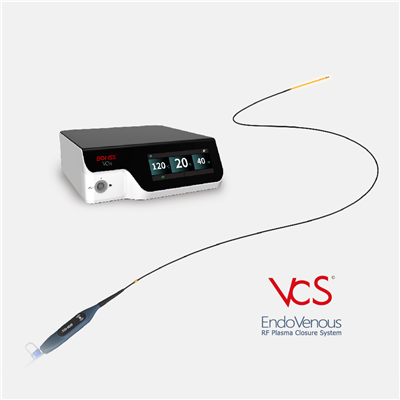
First off, let’s get on the same page: endoscopy is just when a doctor sticks a tiny, flexible camera (the endoscope) into your body through a natural opening (like your mouth or butt) or a small cut to look at organs. And the related gear? That’s not just the camera itself. It’s the light sources, the biopsy tools, the laser bits, the even the software that processes the footage. All of that stuff is way more important than people realize when it comes to oncology—you know, the cancer stuff.
Let’s start with the big one: early detection. That’s where most cancer battles are won, right? If you catch colon cancer stage 1, the survival rate is like 91% (I remember a study last year that backed that up). Catch it stage 4, and that number plummets to 14%—yikes. And how do we catch it early? Endoscopy. I sell high-definition narrow-band imaging (NBI) endoscopes, and let me tell you, they’re game-changers. The old standard white light endoscopy could only see the surface of your colon lining, but NBI uses specific light wavelengths to highlight blood vessels and tiny abnormal cells that look like a little blip to the naked eye. Last quarter, a gastroenterologist client of mine told me they caught 3 times more pre-cancerous polyps with our NBI scopes than their old ones. Those polyps turn into colon cancer if you leave them in there—so catching them early is like yanking a weed before it grows into a tree.
And it’s not just colon cancer. Upper GI stuff too—esophageal, gastric (stomach) cancers. I work with a lot of primary care clinics that used to miss early esophageal cancer because the old endoscopes were blurry. Now with our high-res endoscopes, they can spot those tiny red or white patches that are the first sign of cancer. Even lung cancer! Wait, you might think “endoscopy = colon” but no—there’s bronchoscopy, which is when we stick a scope down your throat into your lungs. We have specialized endobronchial ultrasound (EBUS) tools that let doctors see lymph nodes in the chest that are too small to feel or show up on regular X-rays. They can take a tiny tissue sample (biopsy) right there, in the office, instead of making the patient go through a big surgical procedure. That’s huge for patients—no overnight stay, way less pain.
Speaking of biopsies—our biopsy forceps are a best-seller for a reason. You need a tiny piece of tissue to test for cancer, and if the forceps are flimsy, you might miss the right spot. We make ones with sharp, precision tips that can grab a solid sample even from the tiniest lesion. A lot of cancer centers hate cheap tools because they mess up biopsy results, which means doctors can’t give the right treatment fast. I get a lot of messages from oncologists saying “your forceps cut down our biopsy failure rate by 20%”—that’s money well spent, honestly.
Now, what about treatment? Endoscopy isn’t just for looking. We use endoscopy to remove some cancers entirely, without cutting you open. That’s called minimally invasive endoscopic resection. For early-stage esophageal or colon cancer, if the tumor is still just on the surface (not deep into the wall), doctors can use a tool called an endoscopic submucosal dissection (ESD) device—yep, I sell those too. ESD lets them slice the entire tumor out in one piece, through the endoscope, no big incisions. I had a client in Texas last year who used ESD to remove a 2cm colon tumor from a 62-year-old patient. The patient went home the next day, no chemo needed, and he’s cancer-free 2 years later. Compare that to the old way: open surgery, 6-week recovery, huge scar. That’s the power of the right endoscopy tools.
Then there’s ablation. If a pre-cancerous lesion is too big to resect in one piece, doctors use heat or cold to kill the bad cells. I sell radiofrequency ablation (RFA) probes and cryoablation tools that work through the endoscope. For Barrett’s esophagus (a pre-cancerous condition that can turn into esophageal cancer), RFA is standard now. It zaps the abnormal cells away, so you don’t have to get your esophagus removed. I’ve had a patient’s spouse tell me that her husband avoided a life-altering surgery because of the RFA device we supplied to his clinic. That’s the stuff that makes my job worth it, not just selling gear.
Wait, let’s not forget about management of advanced cancer. For people with later-stage cancer that can’t be removed, endoscopy tools are used to relieve symptoms. Like, if someone has a pancreatic tumor that’s blocking their bile duct, we can put a stent (a tiny tube) through an endoscope to open the duct up, so they can digest food again without pain. Or if a colon tumor is blocking the intestine, a colonoscopy can place a stent to unblock it—no emergency surgery, which is a lifeline for people who are already sick. I see a lot of people underestimate this part: endoscopy isn’t just about curing, it’s about quality of life when cure isn’t possible.
Now, let’s talk about the behind-the-scenes stuff that makes all this work—like image guidance and data. I sell some of the software that pairs with our endoscopes to let doctors store and compare footage over time. So if a patient had a scope a year ago and now has a new one, the doctor can pull up the old images and see exactly how a lesion has changed. That’s super important for monitoring pre-cancerous conditions, or even tracking how a tumor responds to chemo. No more guesswork about “is this getting bigger or smaller?”
I should be real with you, though—this isn’t all roses. There are still gaps. A lot of rural clinics don’t have access to the high-end tools I sell, so they miss a lot of early cancers. Or small cancer centers can’t afford the latest ESD devices, so their patients have to travel hours for treatment. That’s why I do a lot of work trying to help clinics upgrade their gear on payment plans, because I know how much this matters.
At the end of the day, endoscopy-related equipment is the unsung hero of oncology. It’s not the fancy immunotherapy drugs you see in the news, or the big surgical robots. It’s the sharp forceps, the NBI scope, the ESD device, the stent that makes early detection possible, less invasive treatment, and better quality of life for cancer patients.
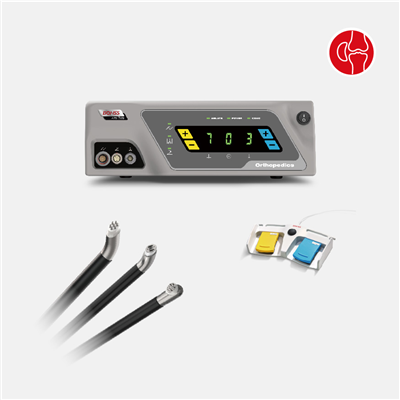
If you’re a clinic manager, oncologist, or practice owner who’s looking to upgrade your endoscopy tools—whether that’s for better screenings, more effective biopsies, or advanced treatment—hit me up to chat. I’m not here to push you the most expensive thing; I’m here to help you figure out what your team actually needs to take care of more patients. We can go over demos, pricing, whatever you need. No pressure, just real talk about tools that save lives.
UBE Surgical Power Systems References
Siegel RL, Miller KD, Jemal A. Cancer statistics, 2023. CA Cancer J Clin. 2023;73(1):17-48.
Pimentel-Nunes P, Dinis-Ribeiro M, Ponchon T, et al. Endoscopic submucosal dissection: European Society of Gastrointestinal Endoscopy (ESGE) Guideline. Endoscopy. 2015;47(9):829-854.
Wang KK, Hwang JH, Anderson MA, et al. The role of endoscopy in the diagnosis and management of esophageal cancer. Gastrointest Endosc. 2016;84(3):375-388.
Jiangsu Bonss Medical Technology Co., Ltd.
As one of the most professional endoscopy related equipments manufacturers and suppliers in China, we’re featured by quality products and good price. Please rest assured to buy bulk endoscopy related equipments for sale here from our factory. Customized orders are welcome.
Address: Building #7,No.898,China Medical City Avenue, Haling District, Taizhou City.Jiangsu P.R. China
E-mail: inquiry@plasma-surgical.com
WebSite: https://www.bonssmedical.com/
